
What Is Real Estate Automation, And How Does It Give You Your Time Back Without Losing the Human Touch?
Let's be honest for a second.
You got into real estate to help people. To build relationships. To be there for clients during one of the biggest moments of their lives.
You did not get into real estate to spend your evenings chasing leads who haven't responded in three weeks, manually sending follow-up emails one by one, or trying to remember which client you were supposed to call back on Thursday.
And yet. Here you are.
If your business feels like it runs on you, and only you, showing up every single day and managing every single touchpoint manually, you are not alone. Most real estate professionals are operating this way. And most of them are exhausted.
The good news is there's a better way. And it doesn't require you to become a tech expert, hire a full-time assistant, or give up the personal relationships that built your business in the first place.
It's called automation. And when it's set up correctly, it doesn't replace you. It frees you.
What Is Real Estate Automation, Really?
Automation in real estate is the use of technology to handle repetitive, time-sensitive communication and follow-up tasks automatically, so you don't have to do them manually every time.
Think of it as a system that works in the background while you're doing the work only you can do: showing homes, negotiating offers, sitting across the table from a client who needs your guidance.
It's not a robot replacing your relationship. It's infrastructure supporting it.
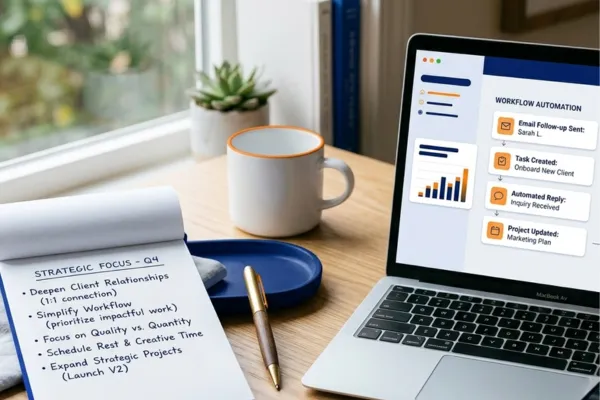
When someone fills out a form on your website at 10pm, automation sends them a response within minutes instead of the next morning. When a lead goes quiet for two weeks, automation sends a gentle check-in on your behalf. When a client closes, automation triggers a thank-you sequence, a review request, and a keep-in-touch campaign that runs for months without you touching it.
The relationship is still yours. The timing and consistency are handled for you.
Why Do Real Estate Professionals Need Automation?
Because the business of real estate never stops. And you can't be everywhere at once.
Here's what happens without automation:
A lead comes in on a Sunday afternoon while you're showing a home. By the time you see it Monday morning, they've already talked to two other agents. You lost the opportunity not because you weren't good enough, but because you weren't fast enough.
A past client hasn't heard from you in eight months. They're thinking about selling. They can't quite remember your number. They Google "real estate agent near me" and call whoever comes up first.
A new lead opts into your website, gets no response for 48 hours, and assumes you're either too busy or not interested. They move on.
None of these are talent problems. They're systems problems.
Speed matters more than most agents realize. Research consistently shows that leads contacted within the first five minutes of inquiry are dramatically more likely to convert than those contacted even an hour later. Most agents are responding in hours or days. The agents with automation in place are responding in seconds.
That gap is where business is won and lost every single day.
What Tasks Can Automation Actually Handle?
More than most agents expect. Here's a breakdown of where automation does its best work:
Immediate Lead Response
When a new lead comes in from your website, a funnel, a social media ad, or a third-party platform, automation sends an instant response. A text. An email. Sometimes both.
That response acknowledges them, sets expectations, and invites them to take a next step, all before you've even seen the notification.
The lead feels seen. The conversation starts. And you haven't done a thing yet.
Lead Nurture Sequences
Not every lead is ready to buy or sell today. Some are six months out. Some are a year out. Most agents stop following up after the second or third attempt because it feels like a waste of time.
Automation doesn't give up. It keeps showing up.
A well-built nurture sequence delivers value over time: a market update, a helpful tip, a relevant article, a simple check-in. It stays in front of your leads consistently and professionally until they're ready to have a conversation. And when that moment comes, your name is the one they already know.
Keep-In-Touch Campaigns for Past Clients
Your past clients are your most valuable asset. And most agents let that asset go cold.
Automation keeps the relationship warm without requiring you to manually remember every birthday, every home anniversary, every market shift that might be relevant to someone who bought with you two years ago.
A keep-in-touch campaign can run for months or years in the background, sending the right message at the right time, making your past clients feel remembered without requiring you to remember everything yourself.
Appointment Booking and Reminders
How much time do you spend going back and forth trying to find a time that works? Automation eliminates that entirely.
An automated booking link lets leads and clients schedule directly into your calendar based on your real availability. Confirmation emails and reminder texts go out automatically. No-shows drop dramatically. You show up prepared.
Review and Referral Requests
The closing is done. The client is thrilled. And you forget to ask for a review because you're already on to the next transaction.
Automation handles that ask for you, at exactly the right moment, in a warm and personal way. A text that goes out a day or two after closing. A follow-up email a week later. A referral ask woven into your post-closing sequence.
Reviews build your reputation. Referrals build your pipeline. Automation makes sure neither one slips through the cracks.
Post-Event and Post-Meeting Follow-Up
After a showing, an open house, or a client meeting, follow-up is critical. And it's one of the first things to fall off when you're busy.
Automation sends a personalized follow-up on your behalf, triggered by whatever action the contact took. They attended your open house. They watched a video on your website. They clicked a link in your email. Each of those actions can trigger the right next message without you managing it manually.
What Is the Difference Between Automation and Spam?
This is the question we hear most often. And it's a fair one.
The difference is strategy, personalization, and relevance.
Spam is a generic message blasted to everyone on a list with no regard for who they are, where they are in their journey, or what they actually need.
Good automation is the opposite. It's a message sent to the right person at the right time based on where they are and what they've done. It's personalized with their name, their situation, and their next logical step. It sounds like you wrote it for them, because strategically, you did.
When a lead fills out a form about buying in a specific neighborhood and your automation responds with information about that neighborhood, that's not spam. That's relevance delivered instantly.
When a past client gets a home anniversary email a year after closing that says "It's been a year since you got the keys to your home. Hope you're loving every minute of it," that's not automated noise. That's a moment that makes someone feel remembered.
The goal of good automation is not to replace human connection. It's to make human connection possible at a scale no individual could sustain manually.
How Does Automation Help With the Workload?
Let's get specific about what changes when automation is in place.
You stop being the bottleneck. Right now, every communication in your business flows through you. Every follow-up, every response, every check-in. When you're busy, things fall through. Automation removes you as the single point of failure and lets your business operate even when you can't.
You stop starting from zero. Without automation, every new lead requires you to manually reach out, manually follow up, manually track where they are. With automation, every new contact enters a sequence that handles the early stages for you. By the time a conversation needs a human touch, the groundwork is already done.
You stop losing leads to response time. The agent who responds first wins more often than not. Automation makes you the agent who always responds first, even at midnight on a Saturday.
You stop forgetting the people who matter. Past clients, warm leads, referral partners. The people in your database who don't need something right now but will eventually. Automation keeps those relationships alive without requiring you to manually remember everyone.
You free up time. This is the one that mattered most to us, and to many of the agents we work with. When your follow-up is running automatically, when your leads are being nurtured without you, when your past clients are receiving touches on a schedule you set once, you get time back. Time for your clients. Time for your family. Time to actually breathe.
That's not a small thing. That's the whole point.
What Does a Real Estate Automation System Actually Look Like?
A well-built system has several components working together:
A CRM (Customer Relationship Management system) is the engine. It stores every contact, tracks every interaction, and triggers every automated action. Without a CRM, automation is just a series of disconnected tools. With one, everything is connected and visible in one place.
Automated email sequences deliver value, nurture relationships, and move leads through your pipeline over time. They're written once and run indefinitely.
Automated text campaigns reach people where they actually are. Text messages have dramatically higher open rates than emails. A well-timed text can restart a conversation that went cold months ago.
A smart website with lead capture feeds new contacts directly into your CRM and triggers your initial response sequences automatically. No manual data entry. No leads slipping through because you forgot to add them.
AI tools like chatbots and voice agents handle incoming inquiries in real time, answer common questions, capture lead information, and even book appointments, all without you picking up the phone.
Dashboards and tracking show you what's working. Which sequences are getting responses. Which leads are most engaged. Where your pipeline is strongest and where it needs attention.
When all of these components are connected and working together, you have a leads machine. Not a collection of tools. A system.
What About the Human Touch? Does Automation Make You Feel Less Personal?
This is the concern we hear most from agents who are hesitant to implement automation. And it's worth taking seriously.
Here's our honest answer: bad automation feels impersonal. Good automation feels like care.
The difference is in the writing, the timing, and the strategy behind it.
When your automated messages are written in your voice, when they're relevant to where the person is in their journey, when they arrive at moments that feel thoughtful rather than random, they don't feel automated. They feel like you remembered.
We've had agents tell us they received responses to automated emails that said things like "thank you so much for checking in, I was just thinking about you." Those emails weren't sent manually. But they landed as if they were.
The agents who use automation most effectively aren't replacing their relationships. They're protecting them. By handling the routine, the repetitive, and the time-sensitive automatically, they free themselves to be fully present for the conversations that actually require a human.
The closing call. The difficult negotiation. The first-time buyer who's scared and needs reassurance. The seller who's grieving the home they raised their family in.
Those moments need you. Automation handles everything else so you can show up fully for the moments that matter.
What Are Real Agents Saying After Implementing Automation?
We've worked with agents at every stage of their careers. Here's what shifts when the right system is in place:
The agent who was losing leads to response time: She was a strong closer but always felt behind on follow-up. Within weeks of implementing automated lead response, she was hearing back from leads she'd never have had time to chase manually. One of her first automated responses turned into a listing appointment she closed that month.
The agent who felt like he was constantly starting over: Every time he got busy with active clients, his pipeline dried up because he stopped nurturing his leads. Automated sequences kept his leads warm through his busiest periods. When he came up for air, there were conversations already in progress.
The team that was drowning in admin: They were spending hours every week manually sending follow-ups, scheduling appointments, and chasing reviews. After building out their automation workflows, those hours went back to their agents. More time with clients. More closings. Less chaos.
None of these are overnight transformations. They're the result of building the right system and letting it run.
Automation Works Best When Your Messaging Is Clear. And Your Messaging Gets Clear When Your Niche Is Clear.
Here's something a lot of agents don't think about when they start building automation. We didn't either, at first.
Automation can send the message. But it can't fix unclear messaging.
If you're not clear on who you serve, your emails, texts, and follow-up can start sounding generic fast. We've seen it. We've lived it.
When your niche is clear, everything changes.
Your messaging feels specific. Your follow-up feels relevant. Your leads feel understood. And your past clients are more likely to stay connected because your communication actually speaks to them.
That's the difference.
An agent who specializes in military relocation will send very different follow-up than an agent trying to speak to everyone at once. One message feels targeted. The other feels easy to ignore.
We were that second agent for longer than we'd like to admit.
That doesn't mean automation only works for your niche.
Your past clients still need consistent communication too, no matter who they are.
The difference is this: your niche messaging should be focused on the specific audience you want to attract. Your past client messaging should be focused on the relationship you want to maintain.
Both matter. And both can run automatically.
The agents who get the most out of automation usually aren't just the ones with the best systems. They're the ones who know exactly who they serve and what those people need to hear.
That's why we always say: get clear on your niche first. Then build the system.
When those two things work together, your automation doesn't just follow up. It connects. It resonates. It converts.
How Do You Get Started With Real Estate Automation?
The most important thing to understand is that you don't have to build everything at once.
Start with the highest-impact pieces:
Step 1: Get your CRM in order. If your contacts are scattered across your phone, sticky notes, spreadsheets, and email threads, no automation will work effectively. A clean, organized CRM is the foundation everything else is built on.
Step 2: Build your lead response sequence. Instant response to new inquiries is the single highest-ROI automation you can implement. Start here.
Step 3: Set up a basic nurture campaign. A simple sequence of five to seven touchpoints over 60 to 90 days keeps leads warm without requiring manual effort.
Step 4: Build your past client keep-in-touch campaign. Your database is your most valuable asset. A keep-in-touch sequence that runs in the background is one of the best investments you can make in your referral pipeline.
Step 5: Add appointment booking and review requests. Once the core sequences are running, these add-ons multiply the impact of every transaction.
Build in this order and you'll see results before the system is even complete.
What We've Seen Work
The agents who build the strongest, most sustainable businesses aren't always the most talented or the most experienced.
They're the ones who stopped trying to do everything manually and built systems that support the way they work.
Automation doesn't make you less personal. It makes you more available. More consistent. More present for the clients who need your full attention.
It's not about working less. It's about working on the right things.
And when the right system is in place, your business doesn't just feel more manageable. It feels like it's finally working with you, not against you.
If You Want a System That Does This for You
This is exactly what we build at Svolta.
Not a collection of tools you have to figure out yourself. A complete, connected system built around your business, your brand, and the way you work.
One of the most rewarding projects we've been part of was working with an independently owned brokerage that was essentially starting over. New direction. New energy. But no brand, no systems, no lead generation, and no clear path forward.
We built everything from the ground up. Branding and messaging. Automation sequences and CRM setup. Lead magnets and marketing funnels. Social media strategy and graphic design. A complete, connected ecosystem built specifically around who they are and who they serve.
What they got on the other side wasn't just a prettier website or a few new tools. It was a business that finally had a foundation. One that could attract the right clients, nurture relationships automatically, and grow without the chaos that comes from doing everything manually.
That's what a real system looks like when all the pieces are working together.
Powered by GoHighLevel, we set up your CRM, build your automation sequences, connect your lead capture, configure your AI tools, and hand you a system that runs, so you can focus on what you do best.
If you're ready to stop doing it all manually and start building something that works without you, here's where to start:
Build Your Own Leads Machine: Our book walks through automation, lead generation, and building a complete marketing ecosystem from the ground up. ($7.95)
Niche Mastery Course: Before you build your automation, get clear on your niche. This course walks you through every step of identifying your niche, clarifying your messaging, and positioning yourself so your automation attracts the right people from the start. ($47)
Work With Us: See how we build done-for-you automation systems for real estate professionals.
Book a Free Discovery Call: Let's talk about where your business is today and what's possible when the right system is behind it.
Because the truth is… you don't need to work harder.
You need a system that works smarter.
And that's absolutely buildable.
To your success,
Randy & Yvonne Hoyt
Svolta Marketing Solutions
Frequently Asked Questions About Real Estate Automation
What is real estate automation? Real estate automation is the use of technology to handle repetitive communication and follow-up tasks automatically. This includes instant lead response, nurture sequences, keep-in-touch campaigns, appointment booking, review requests, and more, all running in the background while you focus on your clients.
Does automation make real estate feel less personal? Not when it's done well. Good automation is written in your voice, timed strategically, and relevant to where the person is in their journey. When it's built correctly, automated messages feel like personal outreach because the strategy behind them is personal, even if the delivery is automated.
What is the most important automation for real estate agents? Instant lead response is the single highest-impact automation most agents can implement. Leads contacted within minutes of inquiry convert at dramatically higher rates than those contacted hours or days later. After that, a lead nurture sequence and a past client keep-in-touch campaign are the next most impactful.
What CRM do you recommend for real estate automation? We build all of our systems on GoHighLevel, which is one of the most powerful and flexible platforms available for real estate professionals. It combines CRM, email and text automation, landing pages, appointment booking, AI tools, and reporting in one connected system.
How long does it take to set up real estate automation? A basic system including lead response, a nurture sequence, and appointment booking can be set up in a matter of weeks. A full system with keep-in-touch campaigns, AI tools, review generation, and custom workflows takes longer but is built in stages so you're seeing results throughout the process.
Will automation work for a solo agent or is it only for teams? Automation is arguably more valuable for solo agents than for teams. When you're doing everything yourself, a system that handles your follow-up, nurtures your leads, and keeps your past clients warm gives you leverage you simply can't create manually. It levels the playing field between solo agents and larger teams.
How much does real estate automation cost? The cost depends on the platform and the scope of the system. GoHighLevel starts at a monthly subscription fee, and the cost of building and configuring the system varies based on complexity. At Svolta, we offer done-for-you packages at different levels depending on where you are in your business. The more relevant question is the cost of not having it: leads lost to slow response, past clients who went cold, referrals that never came because the relationship wasn't maintained.
Can I use automation and still feel like myself with clients? Absolutely. The best automation sounds like you because it's written in your voice and reflects your brand. Clients don't know or care whether a message was scheduled in advance or typed in the moment. What they care about is whether it felt genuine and relevant. That's entirely achievable with the right approach.
Does my niche affect how well automation works? Significantly. Automation can send the message, but it can't fix unclear messaging. When you know exactly who you serve, your automated emails, texts, and follow-up sequences can be written specifically for that audience. They feel targeted and relevant rather than generic. That's the difference between automation that converts and automation that gets ignored. We always recommend getting clear on your niche before building your system. The two work best when they're built together. If you're still working on your niche, our Niche Mastery course is a good place to start: Niche Mastery Course.
Related Articles:
What Is Real Estate Branding, And Why Do Most Agents Get It Completely Wrong?
How to Host a Client Appreciation Event That Generates Referrals for Almost Nothing