
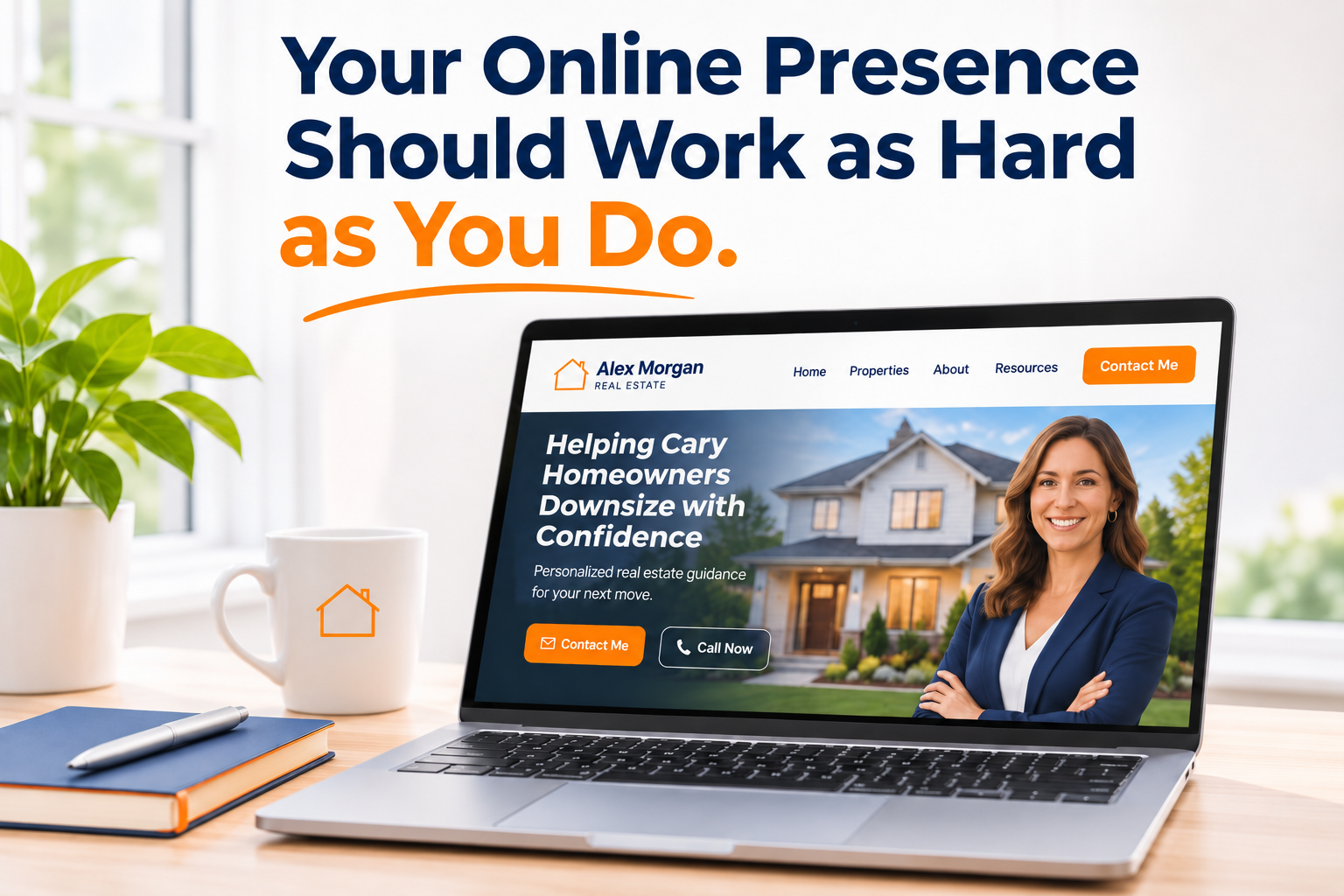
Real Estate Agents: Is Your Online Presence Helping You Get Found, or Getting in the Way?
Why outdated websites, incomplete profiles, and inconsistent information deserve your attention as traditional and AI-powered search continue to evolve.
What We're Finding When We Review Agents' Online Presence
When we sit down and review an agent's website and social profiles, a familiar pattern shows up more often than you'd expect: missing information, outdated brokerage details, incomplete bios, inconsistent branding, broken links, and specialties that are never actually named.
This deserves attention. Not because these agents lack skill or experience; many of them are good at what they do and have been for years. But in a market where transactions are harder to come by, or during a stretch spent handling everything else that comes with running the business, the website and profiles got pushed to the bottom of the list long enough that they quietly stopped reflecting the business. The problem is that it matters beyond appearances. Your business may have evolved considerably over the years, but your online presence may still represent who you were several brokerages, specialties, or market cycles ago.
The Referral Isn't Always the Final Decision
A referral gets you noticed. It doesn't automatically get you hired.
When someone recommends you, the person on the other end often does a second look before they ever pick up the phone. They search your name. They compare your website against your Google results, your social profiles, and whatever reviews turn up. That second look either reinforces the recommendation or quietly undercuts it.
A referral earns attention. What people find online decides whether that attention turns into a conversation.
Your Website Should Clearly Explain Who You Are and Who You Help
A website doesn't need to be flashy to do its job. It needs to be accurate and clear.
That means an updated professional biography that reflects your actual experience, your current brokerage affiliation, and contact information that still works. It means markets, communities, and specialties that are clearly identified rather than implied. It means content that actually answers the questions buyers and sellers are asking, not filler copy that could belong to any agent in any market. And it means basic usability: a site that works on a phone, forms that actually submit, and a clear next step for someone who's ready to reach out.
Vague language is the easiest trap to fall into, because it feels safe. "I help buyers and sellers achieve their real estate goals" could describe nearly every licensed agent in the country, which means it doesn't really describe you at all.
Social Media Profiles Need Attention Too
Facebook, Instagram, LinkedIn, and whatever other platforms you're active on deserve the same scrutiny as your website.
A consistent professional name and photo across platforms, accurate brokerage information, working contact details, a bio that actually explains who you help, a website link that goes somewhere real, and pinned content that still reflects where your business is today. All of it matters.
Posting regularly doesn't make up for a profile that's otherwise incomplete. A steady stream of content on top of an outdated bio and a broken link is still, underneath it, an outdated profile with more noise around it.
Why SEO and AEO Make This Even More Important
SEO, search engine optimization, is the practice of making your website easier for search engines to understand and rank well. AEO, answer engine optimization, is the newer cousin: making your information clear enough that AI tools like ChatGPT or Google's AI-powered search features can actually use it to answer someone's question accurately.
Both traditional and AI-powered search ultimately rely on the same foundation: clear, consistent, accessible, and useful information. Google's own guidance on helpful content and its documentation on AI features and your website both point back to the same basics: answer real questions, demonstrate real expertise, and keep the information accurate. OpenAI's crawler documentation confirms that tools like ChatGPT rely on crawling publicly accessible, well-structured content to inform their answers, not some separate optimization trick agents need to chase down.
There's no guaranteed formula for showing up in a ChatGPT answer or a Google AI Overview, and we wouldn't tell you otherwise. What we would say is this: don't spend your time chasing AI optimization tricks while your basic website and profile information is still inaccurate. Get the fundamentals right first. They're the same fundamentals that have always mattered, just with a newer audience reading them now.
Review Your Google Business Profile and Other Business Listings
If you have a Google Business Profile, it deserves the same review as everything else.
Check that your business information is current: categories, service areas, contact information, website links, and the business description itself. Individual real estate agents operate under specific eligibility and ownership guidelines that are worth understanding, especially around how a profile relates to your brokerage. And whatever you have listed should match what's on your website and your social profiles exactly. An outdated listing doesn't just confuse a potential client. It can confuse the search systems trying to understand who you are and where you actually work.
A 30-Minute Online Presence Audit Every Agent Should Complete
This doesn't require a redesign or a consultant. It requires thirty honest minutes.
Search your name and market in Google.
Review what actually shows up on the first page.
Open your website on your phone.
Read your biography as though you were a potential client meeting you for the first time.
Check your brokerage, contact information, and service areas.
Review your Facebook, Instagram, and LinkedIn profiles.
Inspect your Google Business Profile, if you have one.
Check your links, contact forms, and appointment options to make sure they actually work.
Confirm that your specialty and your value are clearly communicated, not just implied.
Identify your three most important updates and address those first.
You don't have to fix everything today. You just have to know what's actually there.
Online Optimization Is Not a One-Time Project
Your experience grows. Your services and specialties shift. Market conditions change. Your website and profiles should keep pace with all of it, which means this isn't a project you finish once and forget.
A quarterly review routine catches most of what matters: a changed brokerage, a new specialty, an outdated bio, a broken link nobody noticed. Keeping information current in small, regular passes beats waiting years for a complete redesign that may never quite make it to the top of the list. The goal isn't perfection. It's accuracy, relevance, consistency, and an experience that actually reflects the client's point of view.
Look at Your Business Through Your Client's Eyes
If someone recommended you today, would what they find online give them confidence to call you?
You've invested years building your knowledge, your relationships, and your reputation. Your online presence should reflect that investment honestly, not undersell it with outdated information or oversell it with vague claims that could describe anyone.
Take the thirty minutes. Look at what's actually there. Then start with the three updates that matter most.
To your success,
Randy and Yvonne Hoyt
Svolta Marketing Solutions
Frequently Asked Questions
Q: Why does an outdated real estate website matter if an agent is already getting referrals?
A: A referral gets someone's attention, but most people still look the agent up before calling. If the website or profiles they find are outdated or inconsistent, that second look can quietly undercut a recommendation that was otherwise strong.
Q: What's the difference between SEO and AEO for a real estate agent?
A: SEO is about making a website easier for traditional search engines to understand and rank. AEO, answer engine optimization, is the newer version of the same idea applied to AI tools that generate answers directly, like ChatGPT or Google's AI search features. Both rely on the same foundation: clear, accurate, well-organized information.
Q: Is there a guaranteed way to get recommended by ChatGPT or Google's AI search features?
A: No, and any claim promising a guaranteed formula should be treated skeptically. What helps is the same thing that's always helped: accurate, specific, well-organized information that clearly answers real questions, consistently presented across your website and profiles.
Q: How often should an agent review their online presence?
A: A quarterly check tends to catch most of what matters, since brokerages, specialties, and market conditions all shift over time. Small, regular updates work better than waiting years for a full redesign.
Q: What should an agent check first when auditing their own online presence?
A: Start by searching your own name and market in Google and looking at what actually comes up. Then check your website on a phone, review your bio as a potential client would read it, and confirm your brokerage, contact information, and specialties are accurate and consistent everywhere they appear.
Sources:
Google: Creating Helpful, Reliable, People-First Content
Google: AI Features and Your Website
OpenAI: Overview of OpenAI Crawlers
Google: Business Eligibility and Ownership Guidelines
Related Articles: